A Gamer’s Guide to Potholes: There’s More to Road Maintenance than Just Patching!

“Here today, gone tomorrow” could well describe potholes in Singapore, thanks to a responsive road maintenance force.
But what are these pot-sized holes that are prevalent especially during rainy seasons?

Potholes can respawn
Heavy rains, as we have been experiencing more and more lately, and increasingly heavy vehicles, put our roads more at risk of developing potholes.
Yet, in the past three years, we have seen the number of them drop by almost 40%! How did that happen?
The magic of maintenance
Surface deterioration addressed at an early stage can prevent potholes from forming.
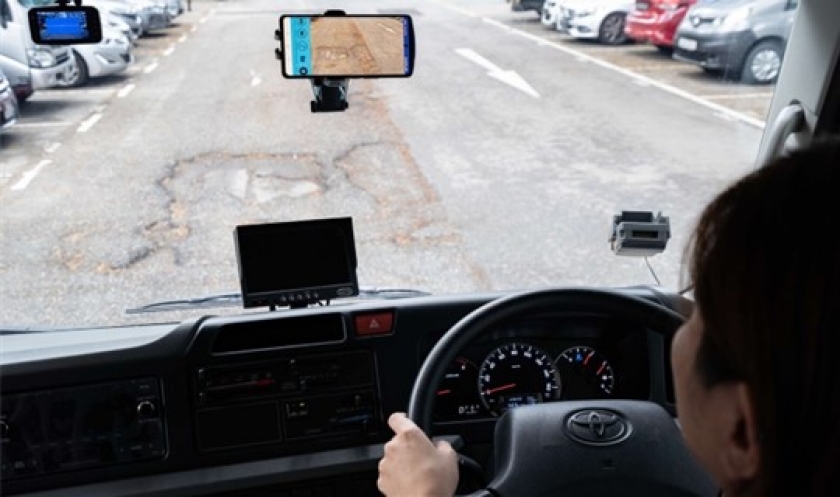
So, regular inspections are performed: weekly on the expressways, fortnightly on the major roads and every eight weeks elsewhere. This can be labour-intensive—experienced inspectors need to keep a focused eye on the road while being driven slowly through the streets. Public feedback helps, too.
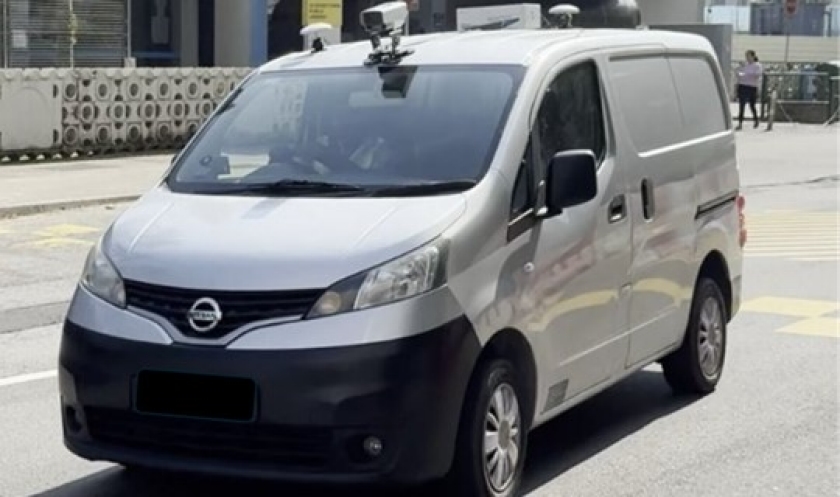
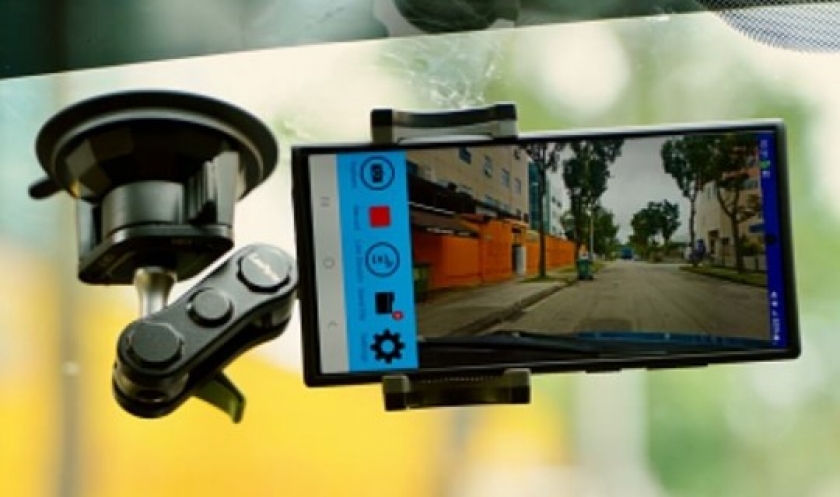
Fortunately, we use artificial intelligence (AI) and video analytics in our new Road Maintenance Management System. Vehicle-mounted cameras find cracks, potholes, ponding and other visible defects, with AI providing higher than 90% accuracy. Once an issue is flagged, maintenance teams are promptly dispatched to rectify the defect. It’s all good news for productivity and efficiency!
On top of this, we deploy specialised equipment to measure other road conditions as well. These are:
- Laser crack measurement evaluates road surfaces for cracks and roughness.
- Grip testing assesses skid resistance.
- The structural integrity of the roads is checked with a falling weight deflectometer.
Safety at the top of mind
Potholes are quickly patched, as the immediate task is to ensure road users’ safety first.
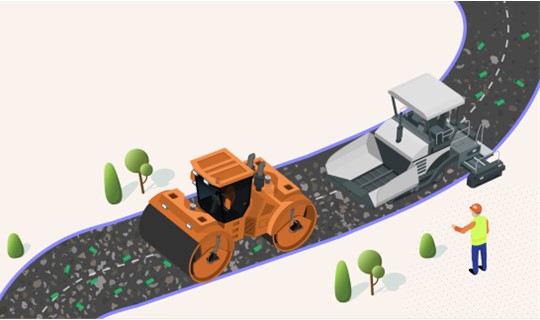
Weather permitting, this can be completed within 24 hours. Later, when conditions are right (such as when the weather turns dry and traffic is light), a full repair is conducted. This entails hacking around the pothole, pouring in new asphalt mix and letting it cure and bond with the existing road surface.
We don’t wait for problems to show up before taking care of our roads, though.
Pre-emptive measures include resurfacing our roads, with a fourfold effort unfolding since 2022. Expressways look like new every 7-10 years, while major roads get done every 10-15 years and minor roads are repaved at 15-25 year intervals.
What we put on the surface counts, too. Various trials are underway for next-gen pavements, which will help our roads be more durable. Potholes will hopefully be a thing of the past!
What about sinkholes?
Potholes do not lead to sinkholes! Neither do they hint at one on the way.
Sinkholes are a different kind of problem, which Singapore thankfully seldom encounters. Unlike potholes, which are at the road surface, sinkholes are structural cavities in the ground which require complex engineering works to fix.
They could happen with natural hollows forming in unstable ground or because of construction disturbances. Because Singapore’s land is mostly granite and hard rock, our ground is less prone to natural sinkholes. And even though there are substantial tunnelling works, strict regulations and monitoring ensure sinkholes remain uncommon.
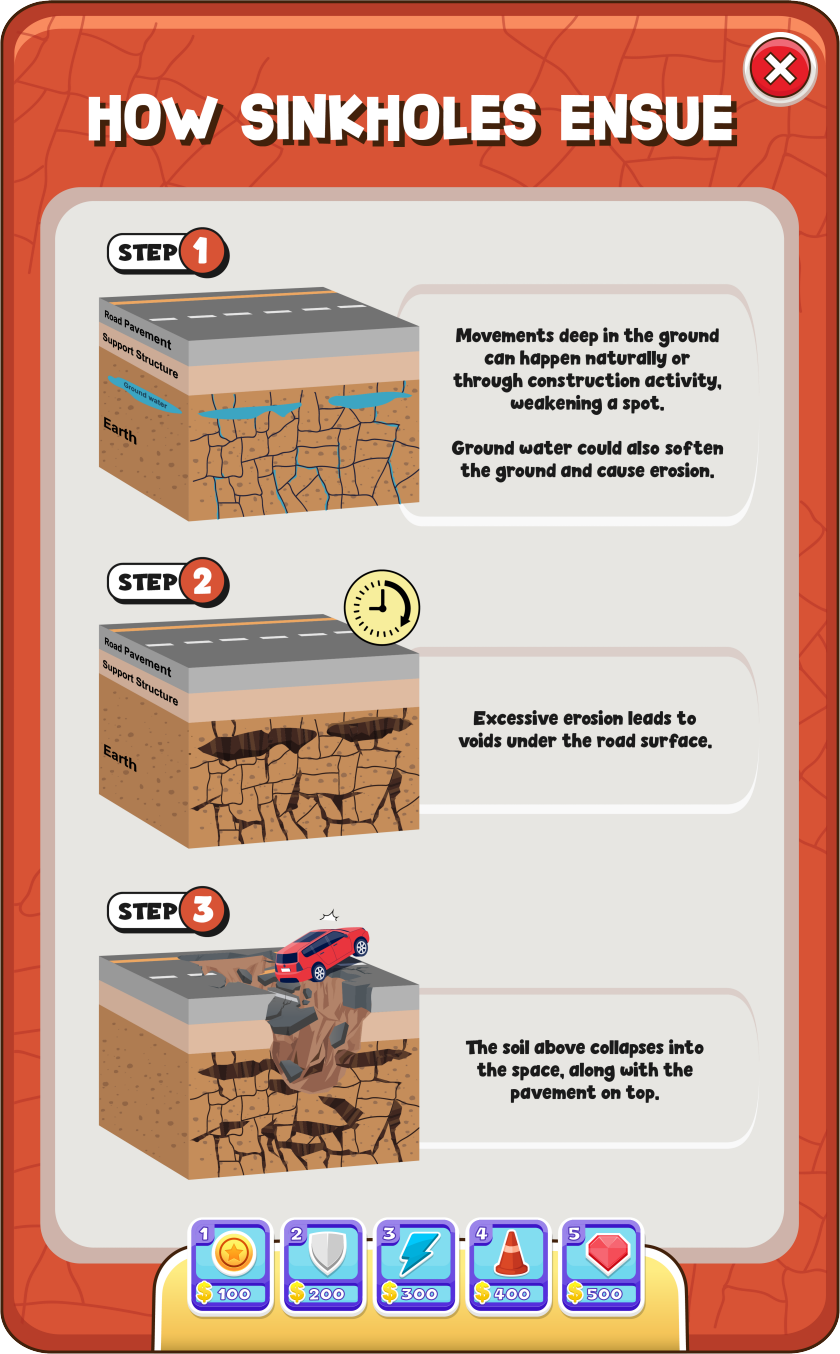
When a sinkhole does occur, though, it can also be repaired, even though this may take months in difficult cases. The process of filling the gaps and stabilising the ground can be via various methods such as grouting, backfilling and full depth repair.
How does technology help?
On the bright side, subtle clues near the surface may be picked up by AI. The shift to AI/VA inspection technology from traditional manual inspection methods has also resulted in a 60% increase in inspection productivity, namely through reduced manpower, prompt inspection times with improved defect detection rates and the auto-generation of defect reports.
So, sinkhole or pothole, inspection and maintenance on our roads can make a whole lot of difference in making sure everyone’s journey is safer!
 Paving the Way for Eco-friendly Roads
 Easy, Breezy, Parents Ride Easy!
 What's Your Cycling Route Personality?
 6 Public Transport Hacks for the Busy Working Professional
 6 Interesting Things About Our Integrated Transport Hub
 Charging An EV: Is It That EZ?
 7 Ways to Look Sharp, Cycle Safe & Have a Smoother Ride
 Your 10 Best Bets for a Scenic Bus Cruise
 Tell me more about TEL4!
 Rejuvenating the Railway: NSEWL's Six Core Systems
 Singapore's Road EMAS-gency Experts
 5 reasons the SRTC is breaking barriers to rail reliability
 Making a Mark in 3D
 History of Buses
 Watt a Smart Street Light!
 Stations, stations on the tracks, which is the greenest of them all?
 What's the Latest Buzz On Our Bus Stop Shelters?
 (Re)Purpose for the People
 Placemaking: Hardware to Heartware
 Making a "PID-Stop" at one of our bus stops?
 Writing a New Chapter on Inclusivity
 TEL3 Hits the City: Get Fed, Get Fit and Feel Fab!
 Drones in the Zone
 What lies beneath: LTA's Digging Machine
 8 Facts to Charge Up You Knowledge About Electric Vehicles
 Take a brake! Explore these eight hidden gems on your bike
 Excuse me, are you a boring engineer?
 Look Ma, No Hands!
 10 Reasons the TEL is an Engine-nious Development
 Introducing Singapore’s Longest Transit Priority Corridor
 5 Fun Facts About Sustainability at LTA